EXPANDED SAW-LIKE POLYELECTROLYTE COILNO DETECTABLE HOMOLOGY · 0 BLAST · 0 FOLDSEEKCALVADOS 2 · 5,667 FRAMES · CONVERGED376 AA · 35.663 kDa · pI 3.28
SINGLE FREE-ENERGY BASIN · NO EVIDENCE OF DISCRETE STATES
CANDIDATE

evo_c1002M

Acidic, glycine-rich intrinsically disordered protein

A novel 376-residue intrinsically disordered protein: 100% predicted disorder, net charge −54.0 at pH 7.4 and no aromatic residues, built from a glycine-rich N-terminal block, a hydropathy-positive central region, an acidic basin and a polar C-terminal region. A converged 510 ns CALVADOS 2 ensemble shows an expanded chain (Rg 6.69 nm, ν 0.598) with no persistent intramolecular contacts, ranked a net-charge-dominated polyelectrolyte (low confidence; a self-avoiding-walk random coil is a close second). No detectable homology in nr, and no flagged structural neighbour in PDB, AlphaFold DB or ESM metagenomic databases.
63× ASP/GLU4× POLY-GLY RUNS · MEAN 9.8 AA3× GPG TURNS1× COLLAGEN-LIKE PERIODICITY0× CYS · 0× AROMATIC11× APPNN · 4× AMYLOGRAM FLAGGED
NET CHARGE pH 7.4
−54.0
SEQUENCE · pI 3.28 · 63 Asp/Glu vs 9 basic

EVO_C1002M · VERIFIED
ENSEMBLE CLASS
Polyelectrolyte
ENSEMBLE · net-charge dominated · score 0.93 · low confidence

EVO_C1002M · VERIFIED
Rg ENSEMBLE MEAN
6.69nm
ENSEMBLE · ± 1.62 nm (SD) · ν 0.598 · expanded

EVO_C1002M · VERIFIED
evo_c1002M · 376 AAFAMILY — · 2026-10-28

BIOPHYSICAL PROFILE

CALVADOS 2 · idpscope
pISEQ3.28
CHARGESEQ-54
GRAVYSEQ-0.229
FCR / κSEQ0.191 / 0.501
Rg (ENSEMBLE)ENS6.69 nm
ν EXPONENTENS0.598
Rh (ENSEMBLE)ENS4.57 nm
DISORDER PROFILE · REAL DATASEQ0.892
N-TERMC-TERM
Metapredict per-residue disorder score; every residue above 0.71.
EXPOSURE PROFILE (RSA) · REAL DATAREF57.8%
N-TERMC-TERM
RSA of the single reference conformation: one snapshot, not an ensemble average.
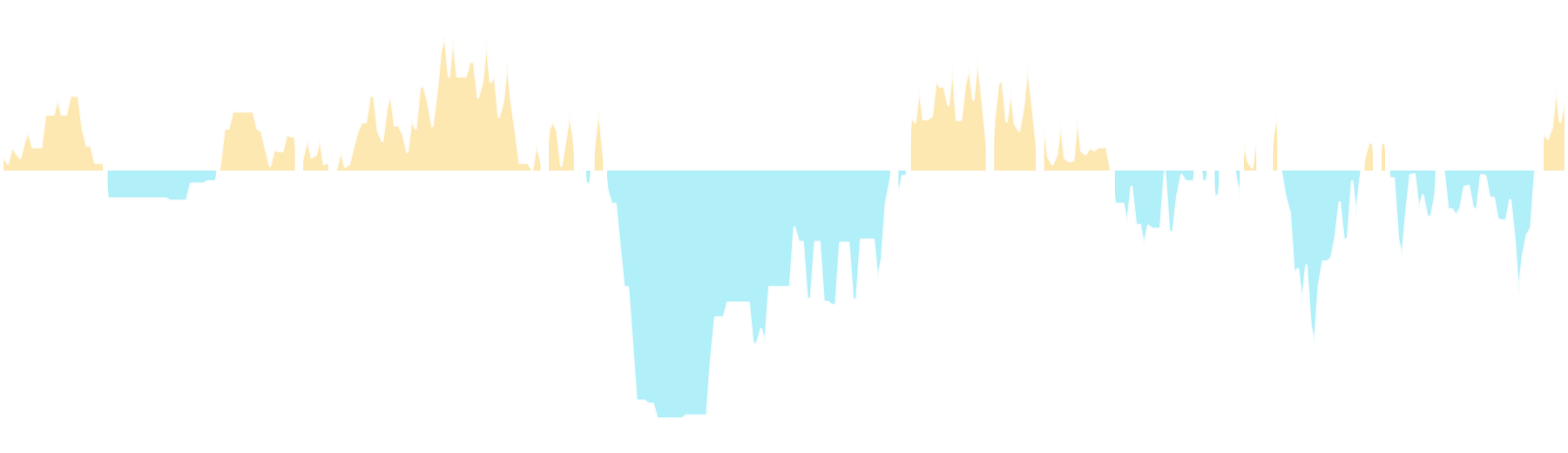
HYDROPATHY (KYTE-DOOLITTLE) · REAL DATASEQRED HYDROPHOBIC · BLUE HYDROPHILIC
Hydropathy profile for evo_c1002M
N-TERMC-TERM
Amber = hydrophobic, cyan = hydrophilic. Sliding window, Kyte-Doolittle scale. Rendered locally from the actual sequence — the sequence itself is never included in this record.
AMYLOID:11× APPNN4× AMYLOGRAM2 OF 13 LOCI IN CROSS-TOOL AGREEMENTSequence-based predictions only; PLAAC is near zero or negative. The two predictors correlate weakly (r = 0.09) and agree only in the C-terminal region, where 2 segments are called by both tools; APPNN also flags segments in the glycine-rich N-terminal block that Amylogram does not. In the ensemble, all 3 enriched intramolecular contact motifs overlap APPNN-flagged residues and none overlaps Amylogram-flagged residues, but these are transient single-chain contacts. The CALVADOS ensemble has no backbone hydrogen bonding, so β-assembly cannot be tested in silico: aggregation is unconfirmed.

WHAT IT IS & WHY IT MATTERS

evo_c1002M is a novel 376-residue intrinsically disordered protein (IDP) with a strongly acidic character (63 aspartates and glutamates against 9 basic residues). It is built from a glycine-rich N-terminal block, a hydropathy-positive central region, an acidic basin and a polar C-terminal region, uses 13 of the 20 amino acids and has no aromatic residues, no cysteines and no folded domain. Sequence analysis predicts 100% disorder. A converged CALVADOS 2 simulation shows an expanded, fast-exchanging chain in solution: one free-energy basin, no evidence of discrete states and no persistent intramolecular contacts. The only enriched contacts are 3 transient motifs, all within the glycine-rich N-terminal block. Throughout this dossier, REF marks the single atomistic reference conformation that seeds the simulation, ENS marks results from the simulated ensemble, and SEQ marks results computed from the sequence alone.

Strongly charged, expanded disordered chains are polymer-like building blocks whose behaviour is set largely by electrostatics, and this candidate is characterized at both ends. Its net charge is −54.0 at pH 7.4 (pI 3.28), carried mainly by one acidic basin, and the isolated chain has predictable dimensions (Rg 6.69 nm, Rh 4.57 nm) that a partner can check by SAXS or DLS; its ensemble Rg matches the self-avoiding-walk reference for this chain length. Independent evidence layers (sequence, disorder, ESMFold, reference conformation and ensemble contact maps) agree on a modular layout of distinct regions, and the two aggregation predictors disagree, which makes aggregation an explicit first experiment. It has no detectable homolog in nr, no flagged structural neighbour in PDB, AlphaFold DB or ESM metagenomic databases, and no RGD or IKVAV motif, and each use case below comes with a decisive first experiment.

NOVELTY

No detectable sequence homology
BLASTp vs nr (NCBI web server, 27 October 2026) — E-value threshold 10, low-complexity filter off, 100 target sequences: 0 hits across 1,172,457,802 sequences. RCSB sequence search: 0 hits.
No flagged structural neighbours
Foldseek (PDB100, AFDB50, AFDB-SwissProt, AFDB-proteome, MGnify-ESM30): 0 flagged hits; RCSB global shape search: 0 hits. The RCSB local shape search returned 100 computed models, all with pLDDT below 50 (28–44), so none qualified for validation. Run on the reference conformation; a disordered chain has little fold to match, so read this together with the sequence result.
ESMFold: low confidence across the chain
Mean pLDDT 34.01; 315 residues below 50, 10 at or above 70 and none at or above 90, with the confident residues in a single segment that the disorder predictors and the ensemble treat as disordered. TM-score 0.152 and RMSD 6.68 Å over 93 aligned residues against the reference conformation (low structural similarity).

FAMILY RELATIONSHIP · F0001

STRUCTURE-ONLYIDP-LIKE

Family F0001 — structure-only sequence/structure relationship. Closest partner evo_c1006M — TM-score 0.974, RMSD 1.17 Å, 376 aligned residues. 6 candidates fall below the same-fold threshold (TM 0.107–0.463).

Note: whole-chain TM-align is less meaningful for disordered chains (flagged in source report) — read this as sequence-and-shape-class kinship, not a folded-protein identity match.

Evaluate evo_c1002M

Full composition, motif coordinates, and simulation trajectories are released to evaluating partners on request.

EXPANDED VIEW
—
—